What 7 years of running an Indian digital agency taught me about pricing
I have been mispricing my own work for six of the last seven years.
Not in the way you would expect. I did not undercharge across the board. I overcharged some clients and undercharged others, sometimes on the same day, in ways that had very little to do with what the work was worth and almost everything to do with how anxious I was during the pricing conversation. I know this because I went back through seven years of proposals last month and did the arithmetic. The pattern is embarrassing.
That is what this post is about. What actually happens in agency pricing conversations in India, why most agencies hide their prices, what that costs everyone, and what I now do instead.
What most Indian agencies do
Almost no Indian agency I know publishes prices on their website. Ask them why, and you will get some version of "pricing depends on scope" or "every project is different" or "we tailor solutions to your business." All technically true. All also cover.
The real reason is simpler. Publishing prices is scary. It commits you to a number. It opens you to comparison with the shop two doors down. It removes the space where you can price this client higher because they seem well-funded, and that client lower because you need the win this month. Every agency owner I know has done both.
I understand why. I did it too, for years.
What hiding your price costs
The hidden cost is bigger than the visible one.
Every inbound inquiry that lands without a price on your site takes about forty-five minutes to convert into a real conversation. You have to qualify the founder, understand the scope, pitch the deliverable, and then land a number reverse-engineered from your last three proposals. If the number lands too high they ghost you. If it lands too low you spend the next four months resenting the engagement. If it lands right, you have burned about six hours of your best time to produce a single proposal.
Multiply across a year. If your site generates thirty inquiries a month and half of them are outside your actual budget range, you have spent roughly one week a month talking to people who were never going to work with you. That is the real cost of hiding pricing, translated into your calendar.
There is a subtler cost too. Founders who ask "what does this cost" and never get a straight answer eventually stop trusting the shop giving evasive answers. They pattern-match to bad experiences with previous vendors. They start negotiating harder before the work has even begun, because they assume every number is soft. The whole relationship begins on a suspicion.
What the work actually costs in India, roughly
Here are honest ranges for a serious Indian agency in 2026. Not the cheapest end of the market, not the enterprise end. The middle, where most of the work happens.
Local SEO for a Patna, Jaipur, Kochi, or Indore business. ₹15,000 to ₹40,000 a month. Google Business Profile optimisation, local citations, reviews workflow, on-page. Anyone quoting below this is subcontracting to a freelancer and marking it up.
Full-service digital marketing retainer. ₹50,000 to ₹1,50,000 a month. SEO, paid, content, analytics, monthly reporting. This is where most of our work sits. Anyone quoting ₹15,000 is running a template. Anyone quoting ₹5,00,000 for the same scope is enterprise-priced and you are the wrong client for them.
Multi-capability retainer with brand and web. ₹1,50,000 to ₹3,00,000 a month. Strategy, creative, paid, SEO, content, analytics, CRO. This is the price of never having to coordinate four vendors.
Website rebuild on Shopify or WordPress. ₹1,50,000 to ₹6,00,000. Depends on template count, whether you need custom integrations, how much content is being rewritten. Under ₹1,00,000 you are getting a theme install. Over ₹6,00,000 you are paying for a headless or bespoke stack.
Brand identity system. ₹2,50,000 to ₹8,00,000. Logo, typography, colour, guidelines document, applied across a handful of surfaces. Under this range, you are buying a logo, not an identity. Above it, you are paying for a rebrand of a company with multiple product lines.
Comprehensive SEO audit with a written roadmap. ₹1,00,000 to ₹3,00,000. Two to four weeks of work. Anyone charging ₹15,000 for this is sending you a Semrush export with two hours of commentary.
None of these are absolute. All of them will annoy someone reading. If you are a founder shopping around and a quote sits inside the range for the deliverable you are actually buying, they are not overpricing you. If it sits far below, ask what is being cut.
The framework I actually use
Three questions before I quote.
What is the client replacing? An in-house hire? A previous agency? A DIY setup on Fiverr? Each of these carries a different price anchor in the client's head. If you are replacing a ₹1,20,000-a-month in-house hire, ₹1,50,000 a month looks reasonable. If you are replacing a Fiverr freelancer at ₹15,000, the same ₹1,50,000 looks insane. The number is identical. The comparison is different.
What is the client's actual budget, and are they hiding it? Founders who will not tell you their budget are usually one of two things. Either they do not have one, in which case the meeting is exploratory not commercial. Or they have one but they think revealing it means you will price to it, in which case they are already worried you will pad. I now say the quiet part out loud. "If you tell me your budget, I will tell you honestly whether we are the right fit for it, and if we are not I will tell you two other shops that are." That line has cost me maybe one engagement in three years and made maybe twelve.
What am I willing to walk away from? This is the most important question. The engagements I have regretted are almost always the ones where I dropped the price to close, because I needed the cash flow that month. Those clients ended up needing the most hand-holding and paying the least. Now I hold the price. The people who negotiate hardest on price will almost always negotiate hardest on scope, timelines, and payment terms too. Behaviour compounds.
What I tell founders now
Ask any agency you are talking to what their monthly retainer floor is before you brief them on your problem. If the number they give is in the ballpark of what you can spend, keep talking. If it is not, thank them and end the call. Both of you have just saved a week.
Get the ranges published on your website if you can. Most agencies will not. The ones that do get better-qualified inquiries and shorter sales cycles. There is a version of your site that answers "what does this cost roughly" in one paragraph. That paragraph is a filter, not a wall.
Stop treating pricing as the last conversation. It is the first one. If the numbers do not fit, everything else you talk about is theatre.
What I would tell 2018 me
The thing I got most wrong in the first three years was believing that quoting a number made me look small. I thought if I stayed vague I would look like I could handle enterprise work if it came in. What I actually did was tell every prospect I met that I did not know what I was worth, which is a very expensive way to communicate.
Publishing prices is a confidence signal. It says you have done enough of this work to know what it should cost, you are not going to change the number based on who is asking, and the conversation is now about whether the fit is right, not whether the deal is soft. Founders respect that. Even the ones who cannot afford you leave the call thinking better of you than they would have.
I still get some of this wrong. I still occasionally quote low because the client is charming, or high because they mentioned their fundraise. The gap between my worst and best pricing decisions is smaller than it was three years ago. It is not zero. It might never be.
If any of this is useful for a pricing conversation you are about to have on your own side, I am happy to talk about it. The contact form is the easiest way in. Tell me what you are trying to make true. I read every brief.
— Shubhanshu
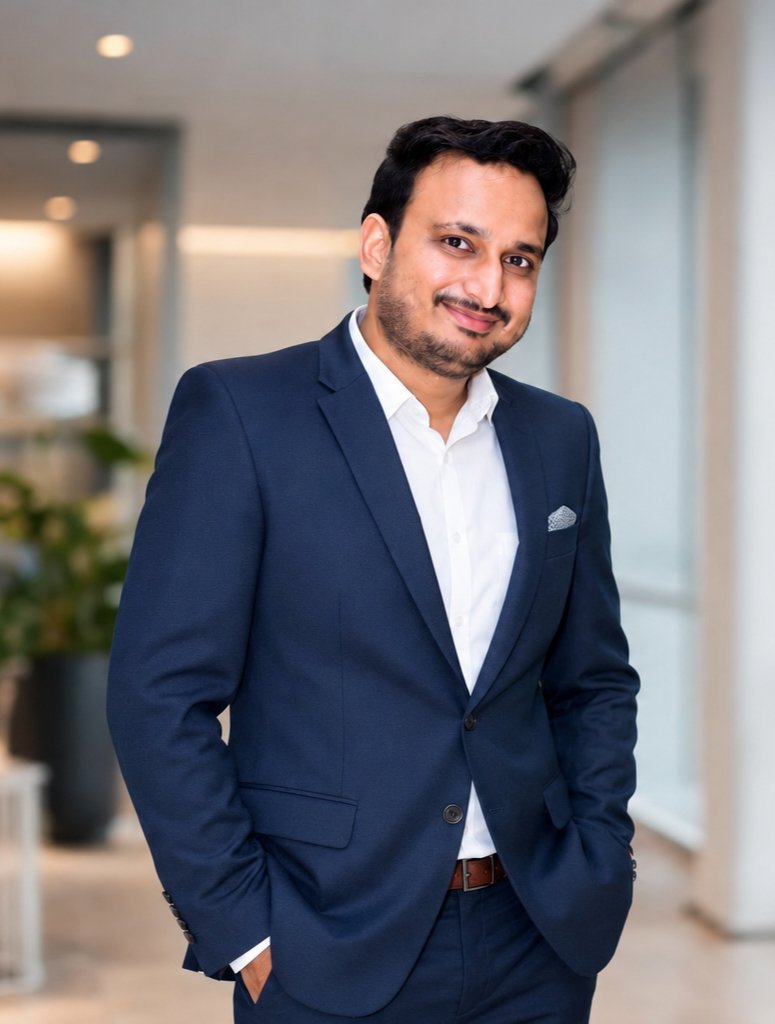
Shubhanshu Mohan
Founder of Digital Legates. Seven years building digital work for 40+ Indian brands across events, healthcare, D2C, professional services, and sustainability. LinkedIn · Full bio