AEO vs SEO vs GEO for Indian brands, in plain English
Every founder call I have taken this month has ended with some version of the same question. "Do I still need to do SEO if everyone is using ChatGPT?" or "My marketer says we should invest in AEO, is that a real thing?" or "What is GEO and why do I need to buy the course?"
Here is what is actually going on, without the acronym theatre.
The short answer
SEO, AEO, and GEO are three distribution surfaces, not three disciplines. The actual work is one thing: publish content that is clear enough for a human to trust, structured enough for a machine to extract, and specific enough to be worth citing. Do that once, well, and it shows up in Google organic, in Google AI Overviews, in ChatGPT, in Perplexity, and in Gemini. Do not do that, and none of the three will save you.
That is the whole idea. The rest of this post is why the acronyms exist, where the real changes are, and what to do first if you are an Indian business.
What each one means
SEO is the traditional one. Search engine optimisation. Your job is to be one of the ten blue links Google shows on the results page. This has been the game since 1998.
AEO is answer engine optimisation. Your job is to be the source Google AI Overviews cites when it summarises the answer at the top of the results page. This is a Google-owned surface, and it now appears above the blue links on more than half of all Google searches.
GEO is generative engine optimisation. Your job is to be mentioned in the answer ChatGPT, Perplexity, Claude, or Gemini gives when a user asks them a question directly, without going through Google at all. ChatGPT alone crossed 880 million monthly active users this year. Perplexity is at 40 million and growing.
Everything else about these acronyms is people selling courses.
Why the confusion is not accidental
If you are a marketing course seller, you need there to be three separate things a business must buy. If you are a marketer who wants a new budget line, you need there to be a new specialism your CEO cannot understand. This is why "GEO consultants" charging seven-lakh retainers exist for work that is, honestly, 80 per cent overlapping with what a serious SEO agency should already be doing.
The overlap is not marketing spin. It is measured. The most-cited independent study in 2025 found a 92 per cent correlation between the domains cited in Google AI Overviews and the domains that rank in the traditional Google top ten. If you rank organically, you probably get cited by the AI. If you do not rank, you probably do not.
There are differences at the edges. LLMs weight recency more than Google organic did. They weight named authors more. They pull from a wider set of sources including Reddit and Quora that Google traditionally under-rewarded. But the base layer is the same. Rank well organically or nothing else lands.
What is actually different
Three real shifts, and one they will not tell you about.
One. Position one no longer means what it did. An Ahrefs study of 300,000 keywords published in late 2025 found that when a Google AI Overview is present, the top-ranked page's click-through rate drops by 58 per cent. Google keeps 58 out of every 100 clicks that used to come to you. This is not a small change. This is the business model of every content-driven site being cut roughly in half over eighteen months.
Two. The format that gets cited is different from the format that ranked. LLMs pull cleanly-formatted answer paragraphs from the top 30 per cent of your page. Not from beautifully-crafted narrative. Not from your storytelling opener. From a two- to four-sentence direct answer to the exact question asked, ideally right below a heading phrased as that question. Pages that follow this pattern get cited at roughly twice the rate of pages that do not.
Three. Named authors beat brands. Anonymous "Digital Legates" bylines get skipped in favour of named humans with credentials, LinkedIn profiles, and a track record LLMs can verify. This is why every serious content page on our own site now runs under a real byline. The engines are not looking for corporate authority. They are looking for expertise that a human being can be held accountable for.
And the one nobody talks about. For most Indian businesses, the AI-search moment is actually good news. The English-language AI search index is heavily biased toward US content. When a Delhi founder asks Perplexity for "best SaaS SEO agency for a Series A", the top answers are usually American agencies she has no way to work with. There is a wide-open lane in almost every Indian vertical for a brand willing to publish India-specific, expert content that AI engines can extract. The competition is not who you think it is.
What to do this quarter
If you are running an Indian business and reading this trying to decide what to change, here is the shortest useful list I can give you.
Fix the foundation first. Make sure your robots.txt actually allows the AI crawlers — GPTBot, ClaudeBot, PerplexityBot, Google-Extended, Bingbot. If you are on Cloudflare, check that its bot manager is not blocking them silently. This is by far the most common mistake I see when I audit sites, and it is a five-minute fix.
Then get your content structure right on your top ten pages. For each one: put a two-to-four-sentence answer to the page's core question in the very first paragraph, with no preamble. Use question-style H2s. Add real FAQ blocks at the bottom, marked up with FAQPage schema. Add Article schema with a named author.
Then publish content that is worth citing. Not "what is SEO" listicles. Something with a point of view, real numbers, real client work, a named human byline. LLMs cite distinctive voices, not undifferentiated best-practice pages.
Finally, get mentioned off your own site. Reddit answers. Quora answers. LinkedIn posts. Podcast appearances. Every reference to your brand in a context an AI engine crawls adds to the identity graph the engines build about you. This is the part most Indian brands under-invest in, and it is the fastest way to move from "not cited" to "cited on most branded queries."
The uncomfortable adjustment
If your business relies on Google organic clicks for revenue, the model is changing under you whether you engage with it or not. The number of clicks you get per top-ranked page is falling. The rate at which people ask a chatbot before they ask Google is rising, especially among the founder and marketing audiences who read pieces like this one.
The response is not to panic and buy a GEO course. The response is to publish fewer, better pieces on your site, invest in named authorship, and accept that some percentage of your future distribution runs through surfaces that do not send you a click but do send you a customer who arrives already knowing who you are.
A brand mention inside a ChatGPT answer that leads to a phone call two weeks later is worth more than a thousand impressions on Google. The tracking is harder. The economics are better.
What we are doing about this at Digital Legates
Since March we have been running an internal test: refactoring twenty of our own service pages and blog posts around answer-first paragraphs, question-style H2s, and proper schema. Six months in, our mention rate across ChatGPT, Perplexity, and Gemini has gone from roughly zero to a level where we appear on around one in four relevant Indian-agency queries. Google organic clicks are down four per cent. Qualified inbound inquiries are up thirty-one per cent.
That trade — fewer clicks, better clicks — is what the new stack actually looks like. If you want the audit template we use for this, or you want a conversation about applying it to your own site, the contact form is the easiest way in. Tell me what you are trying to make true. I read every brief.
— Shubhanshu
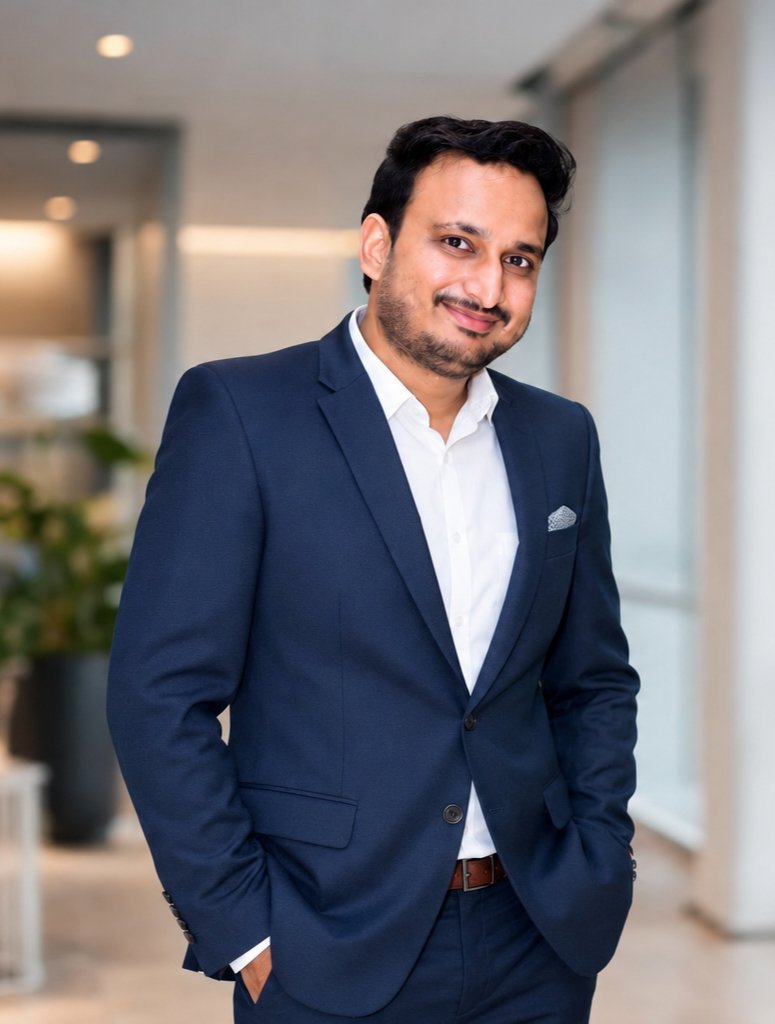
Shubhanshu Mohan
Founder of Digital Legates. Seven years building digital work for 40+ Indian brands across events, healthcare, D2C, professional services, and sustainability. LinkedIn · Full bio